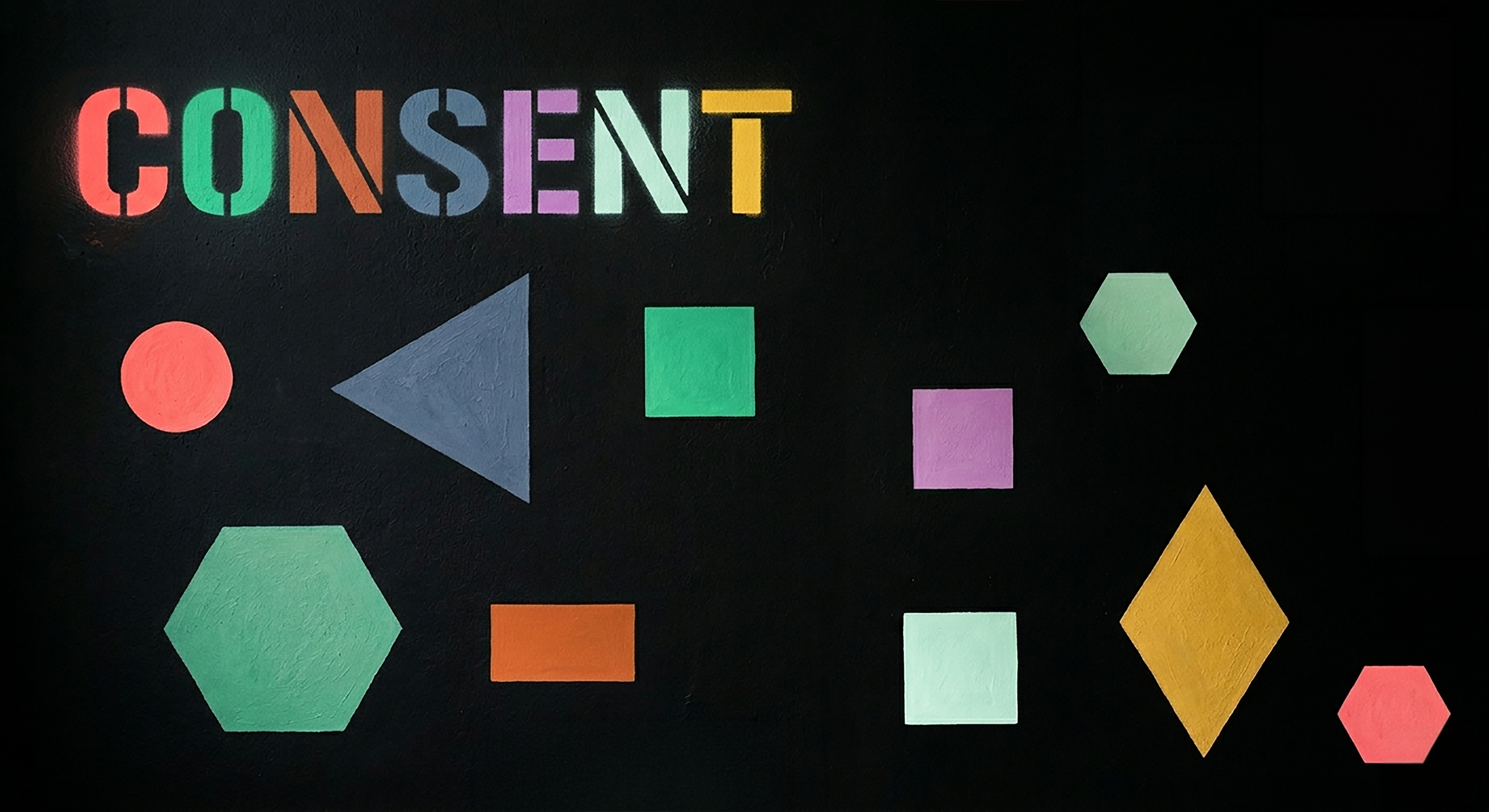
Every social space we inhabit arrives pre-loaded with pressure. The pressure of face, of history, of consequence, of performance. We learn to navigate consent inside systems that make honest navigation almost impossible. Consent removes all of it. You enter anonymously, a geometric shape, a colour from a pre-set palette, nothing more. The space is open black. Other shapes move through it. When you encounter one, you may reach toward them. They may accept or decline. If they decline, they are gone from your world for the duration. If they accept, you have only your words. The architecture of this world is the lesson. There is no instruction. There is only what happens when consent is the only available currency, and every participant knows it.
The system has memory. It remembers what you did with the answer you were given, whether you respected a decline, whether you pushed where you weren't wanted, whether you showed up honestly in the exchange you were granted. That memory shapes what becomes available to you. Not as punishment. As consequence. The way the real world works when it's working properly.
Consent is built for education departments, sexual health organisations, universities, and youth mental health services. It is designed for the age cohorts where these lessons matter most, sorted by jurisdiction, grouped conservatively, governed by verified identity at the account layer and complete anonymity within the experience. You cannot know who you are talking to. You can only know what they choose to say, and what you choose to do with it.
This is consent education as embodied practice. Not a video. Not a worksheet. Not a classroom discussion where everyone performs the right answer for the teacher. A space where the only way through is to actually do it, to ask, to wait, to accept the answer you receive, and to discover what kind of participant you are when nobody is watching and the only thing that exists is the decision in front of you.